The historic events of 14th July, from the French Revolution to India’s Quit India movement and the story of Eiffel Tower.
Dear Students,
Did you know that someone once sold the Eiffel Tower? Not just once—but twice! Yes, you read that right! But before we meet this cheeky con man, let’s learn about some fascinating events that happened on 14th July in history.
🔥 French Revolution Begins — 14th July 1789
It was on this day in 1789 that the French Revolution began. People in France were fed up with the unfair treatment from the King and the nobles. While the rich lived in big palaces and feasted every day, ordinary people struggled to buy even a loaf of bread!
The revolution began when an angry crowd stormed the Bastille prison in Paris. It was the beginning of a movement that would bring major changes in the way people were treated, not just in France, but across the world.
Today, 14th July is celebrated as Bastille Day in France—with fireworks, parades, and lots of fun!

🕰️ Tick-Tock Goes the Watch — 14th July 1914
On this same day, the famous watch company Rolex received the first Class “A” certificate for a wristwatch from the Kew Observatory in England.
Why was this so special? Because that certificate was normally only given to marine chronometers—super-accurate clocks used by sailors. For a wristwatch to be that precise? It was revolutionary! Rolex truly proved that tiny watches could be mighty.

Quit India, Said India — 14th July 1942
Far away from France, in a place called Wardha in India, leaders of the Indian National Congress met to plan something big. They passed a resolution asking Mahatma Gandhi to lead a non-violent mass movement to tell the British: “Quit India!”

🗼 The Eiffel Tower That Was “Sold”… Twice?!
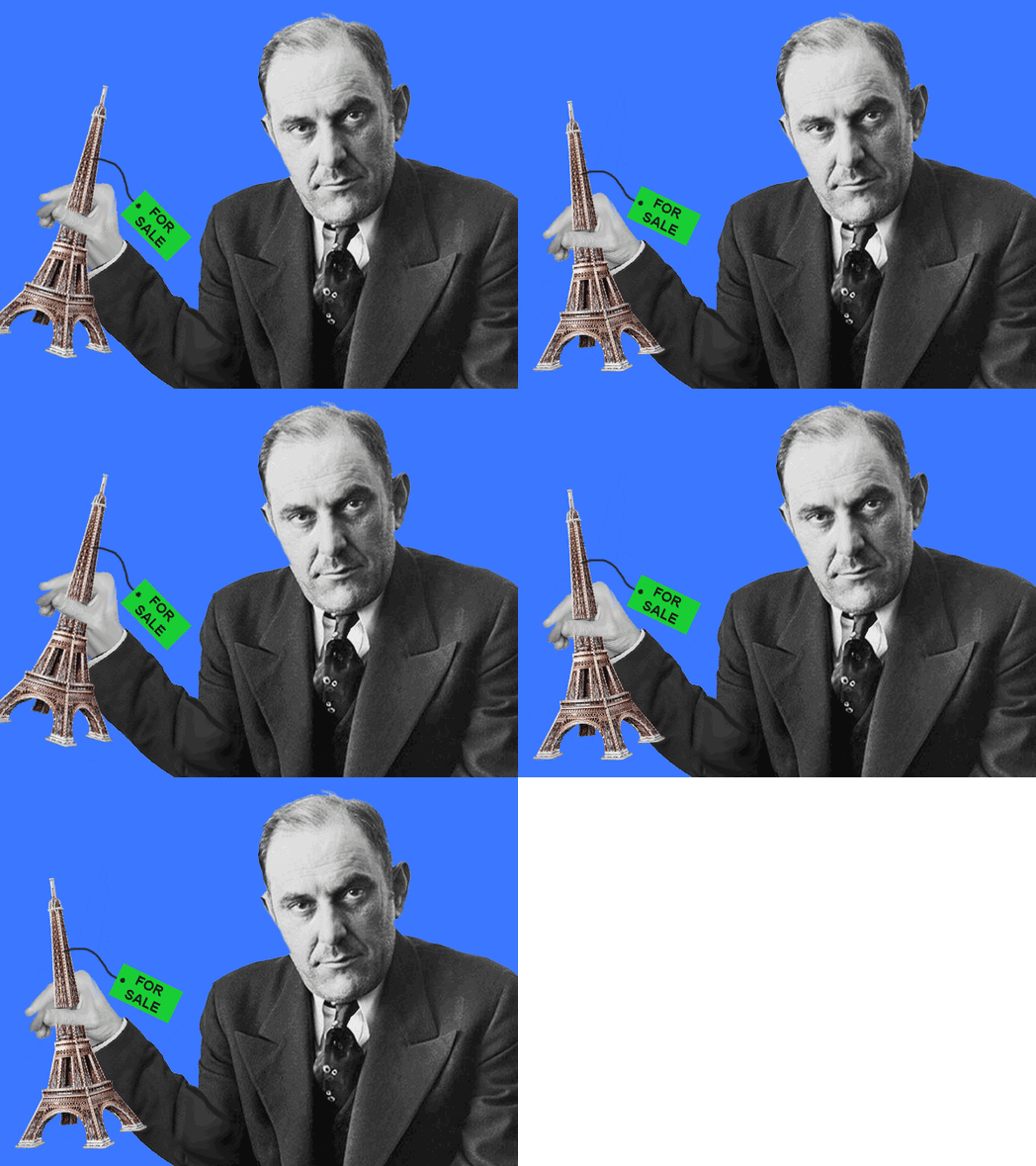
Now, let’s meet Victor Lustig, a man with a suitcase full of tricks.
In 1925, Lustig arrived in Paris. While reading the newspaper, he noticed a little article saying the Eiffel Tower was getting rusty and expensive to maintain. It even said some people thought it might be taken down.
💡 Ding! An idea sparked in Lustig’s head.
He hired a forger to make fake official documents, called himself a government officer, and invited some rich metal dealers for a secret meeting in a fancy hotel. He told them the Eiffel Tower was going to be secretly sold as scrap metal and they had a chance to buy it.
One man, André Poisson, took the bait. He wanted to impress everyone in Paris and agreed to buy the Eiffel Tower—for a huge amount of money and a private bribe to Lustig. Once the money was paid, Lustig disappeared!
Now, here’s the clever bit: Poisson was so embarrassed he didn’t report the scam to the police!
Guess what Lustig did next?
He came back to Paris and tried the same trick again! But this time, someone did inform the police, and Lustig had to run away to America.
🎩 Lesson of the Day?
Victor Lustig was clever—but in the wrong way. His tricks make for an exciting tale, but it’s important to remember that honesty and hard work are what truly bring success.
So the next time someone tells you a “too-good-to-be-true” story—especially about buying a famous landmark—remember Victor Lustig and check twice before you say oui!
Until next time, stay curious and keep exploring history!✍️