
A heartfelt reflection on Rabindranath Tagore, exploring his timeless influence, the hidden history behind the “Tagore” surname, and the magic of his songs, stories, and paintings that continue to inspire every generation.
I had the strangest dream today. An old man was asking another,
“Ki re Bhanusingha, notun ki likhli?”
And the other old man smiled faintly and replied,
“Likhbo ki kore; kolom je ar nei.”
Soon I woke up and realised that was just a dream. But then I kept on wondering who is Bhanusingha and why did he look so femiliar.
Anyways, yesterday was rabindra Jayanti, so as of now let me tell you about this great man.
For me RabindraTagore was always a children’s poet till class 5. I still remember, my mother used to read the stories to me, and I used to listen to those with a mesmerised face. However, after turning 12 my way of seeing this brightening star changed, and after 14, I could unexpectedly relate to the lines written by him. It was then; I realised Rabindranath Tagore is not just a poet or a writer for a particular age group, it’s like magic how a toddler and even an aged person could relate to a same story written by him, in their own way.
And then I researched about this eminent personality who had mesmerised my thinking. And do you know what I found? We still don’t know him properly. That night I curiously called up Somashish sir and asked, “Sir who is Rabindranath Tagore, why are his stories so magical, where does he come from?”
Sir calmly replied, “Firstly, do you know the real name of him?”
I told without any hesitation, “Yes, Rabindranath Thakur”
It was him who corrected me and told me to find the actual information.
After days of research, I finally found it out. And I also discovered that even many of us are unaware of the fact that Thakur won’t have been Thakur if one incident had not happened.
So, the story begins when Maharaja Khitishur gifted the Kush gram of Bordhoman, as a prize to the son of Sankrit Pandit, Hatto Narayan, who is Ninonath.
It was then that they started living in the village and had taken over the surname of “Kushari”. Later they had left Bordhoman and started living in different parts of unpartitioned Bengal.
After generations, it is said that four brahman brothers- Kamdeb Kushari, Sukdeb Kushari, Rotideb Kushari and Joydeb Kushari had smelled the essence of a special meat by mistake, due to which they were considered disgraced and had to leave the Sundarbans.
During the end of the 17th century, Sukdeb Kushari and his Bhaipo;Panchanan Kushari came to Gonbindopur.Panchanan Kushari was sharp and cunning, he srarted living in the Ganga par with the Jele Parivar and started working in ships.
As earlier, no brahman lived or had come in that area so, the jele parivar had welcomed him warmly.
Panchanan Kushari continued his work to serve the poor and help the villagers, and this how he became thakurmoshai for the villagers, and later on he had become Panchanan Thakur. Even the English-Buissiness men started calling him “Thakur”. However, they couldn’t pronounce Thakur so, it became “Tagore” overtime.
Later the descendant of Panchanan Thakur that is, Nilmoni Thakur became a very good friend of Baishnob Choron Seth. And Baishnob Choron Seth gifted the land in Jora Shako as a gift of friendship to Nilmoni Thakur. And then, in 25 Boisakh, 1861 was born the brightest star of the Jorashako parivar, Rabindranath Tagore.
Now just imagine if all these had not happened, we would call him”Rabindranath Kushari” and how would it sound?
Many of us study the stories of Rabindranath Tagore but only a very of us knew this. He wasn’t just a poet; he was a whole universe of creativity. He wrote more than two thousand songs, each having different feeling and meaning.
From “majhe majhe tobo dekha pai” describing how clouds cover our heart not letting us see what we really want to, to”ore grihobashi” describing the beauty of Basanta. “Mor Bhabonare Ki Haway Matalo” carries the dreamy intoxication of springtime emotions and youthful wonder. He has beautifully expressed every small detail of Bengal and his surroundings through his songs.
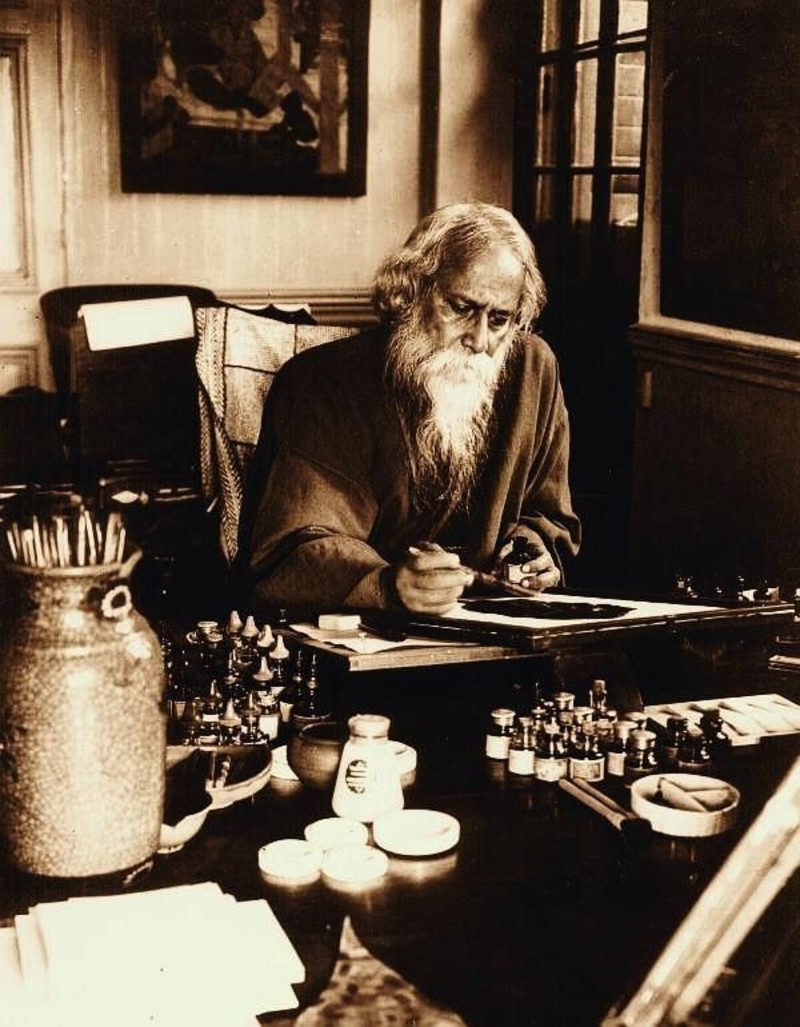
And at the age when most people slow down, Tagore discovered yet another form of creativity-painting. What made his paintings extraordinary was that he had no formal training in art. He painted freely, guided entirely by instinct and imagination. Soon, his artworks were exhibited in cities across Europe, where critics admired their originality and emotional power.
Whether through words, songs, or colors, Rabindranath Tagore created beauty that crossed all boundaries. It is true that the sun of 25 Boisakh 1861 never sets, Tagore still lives in all of us.
And guess what after all these reading about Tagore I realise who those old men in my dream were, they were none other than Rabindra Tagore himself as his pen name was Bhanusingha and the other gentleman was Acaharya Jagadish Chandra Bose and what I saw was a discussion between these two friends, perhaps reminding me to write more.
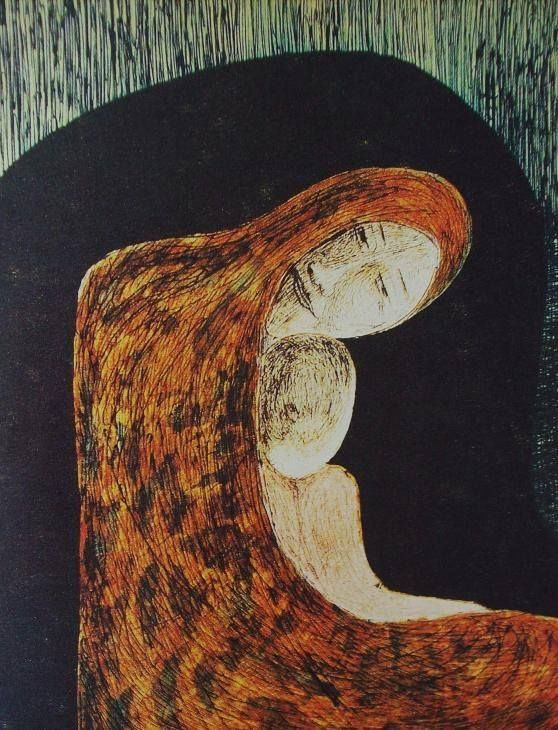
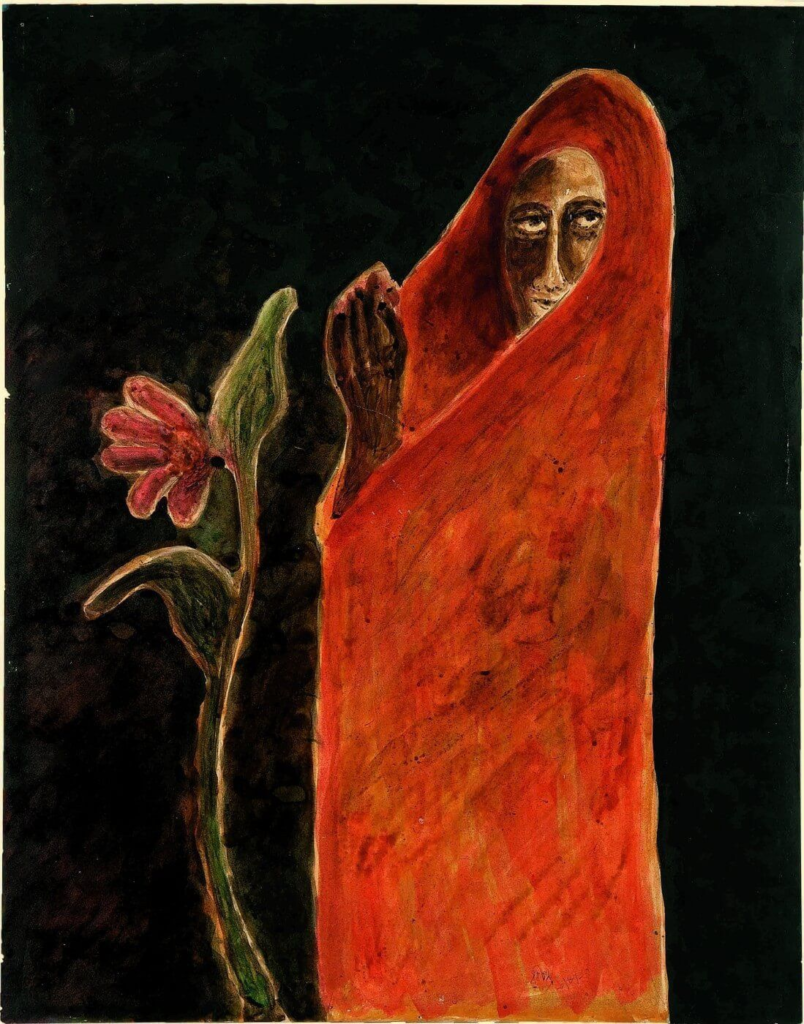
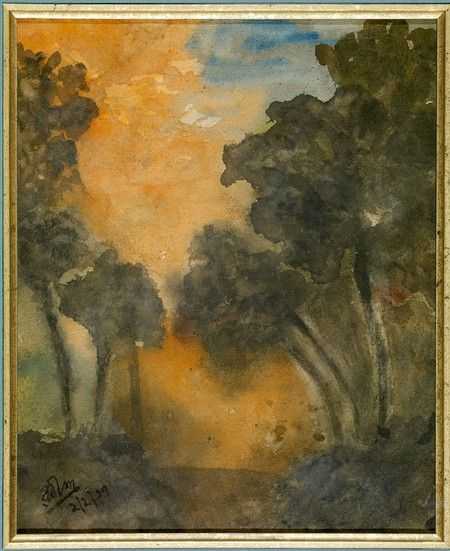
Paintings by Rabindranath Tagore.
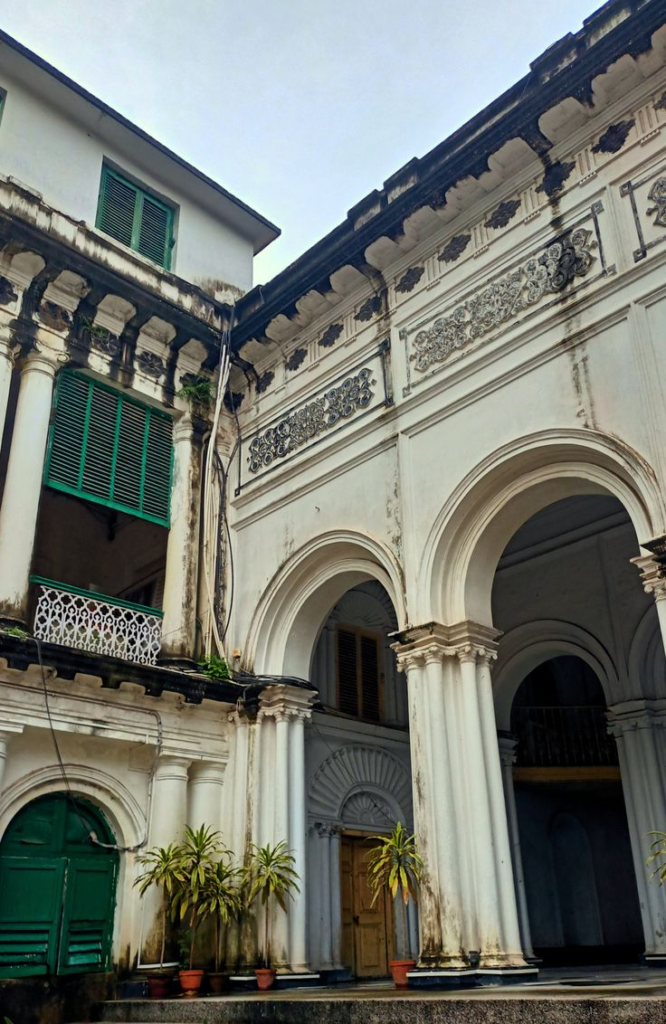
Jorashako Thakurbari