
War and Peace is a powerful tale by Anupam Roy, Class 9 of war, loss, and redemption, following a soldier who transforms from a warrior into a teacher, choosing compassion over conquest and inspiring a generation to defend freedom with wisdom and courage.
Before the drums of war ever thundered, we were merely soldiers wrapped in laughter. We did not yet know destiny was sharpening its blade for us. Beneath the open sky we jested, shared stories, and treasured the warmth of brotherhood. Then the commander’s decree fell like winter frost—battle awaited. In an instant, mirth dissolved into silence.
Among us stood Zorav. Even while fastening his armour and adjusting his blade, he smiled as though war were but another passing storm. He believed we would return to laughter once steel had sung its song. Riding toward the battlefield, we traded jokes upon horseback, unaware that fate had already chosen its victims.
When we arrived, the enemy awaited us, their gaze devoid of mercy. The air itself felt sharpened.
At first, victory seemed certain. Our ranks were vast, our cavalry strong, our cannons formidable. Triumph appeared within reach. Then came a thunderclap that fractured hope. A single cannon roared—and within moments, a barrage followed. The earth convulsed beneath relentless fire. Thousands fell before breath could form prayer.
Panic seized me. Through smoke and chaos, I discerned the cruel brilliance of their strategy—cannons concealed within dense forest shadows. I cursed my blindness. Had I foreseen it, lives might have been spared. Grief clawed at my chest, but the commander’s voice tore me from despair. I was ordered to ride back to the palace and plead for reinforcements.
My trembling hands guided my horse toward the kingdom. Before the king, I recounted the carnage. Without hesitation, he summoned the mahouts and their war elephants—colossal beasts clad in iron resolve. I rode back with them, though by the time I reached the battlefield, devastation had etched itself into memory.
We had won—but at a cost too grave for celebration. Corpses carpeted the land; the soil blushed crimson; even the river seemed to mourn.
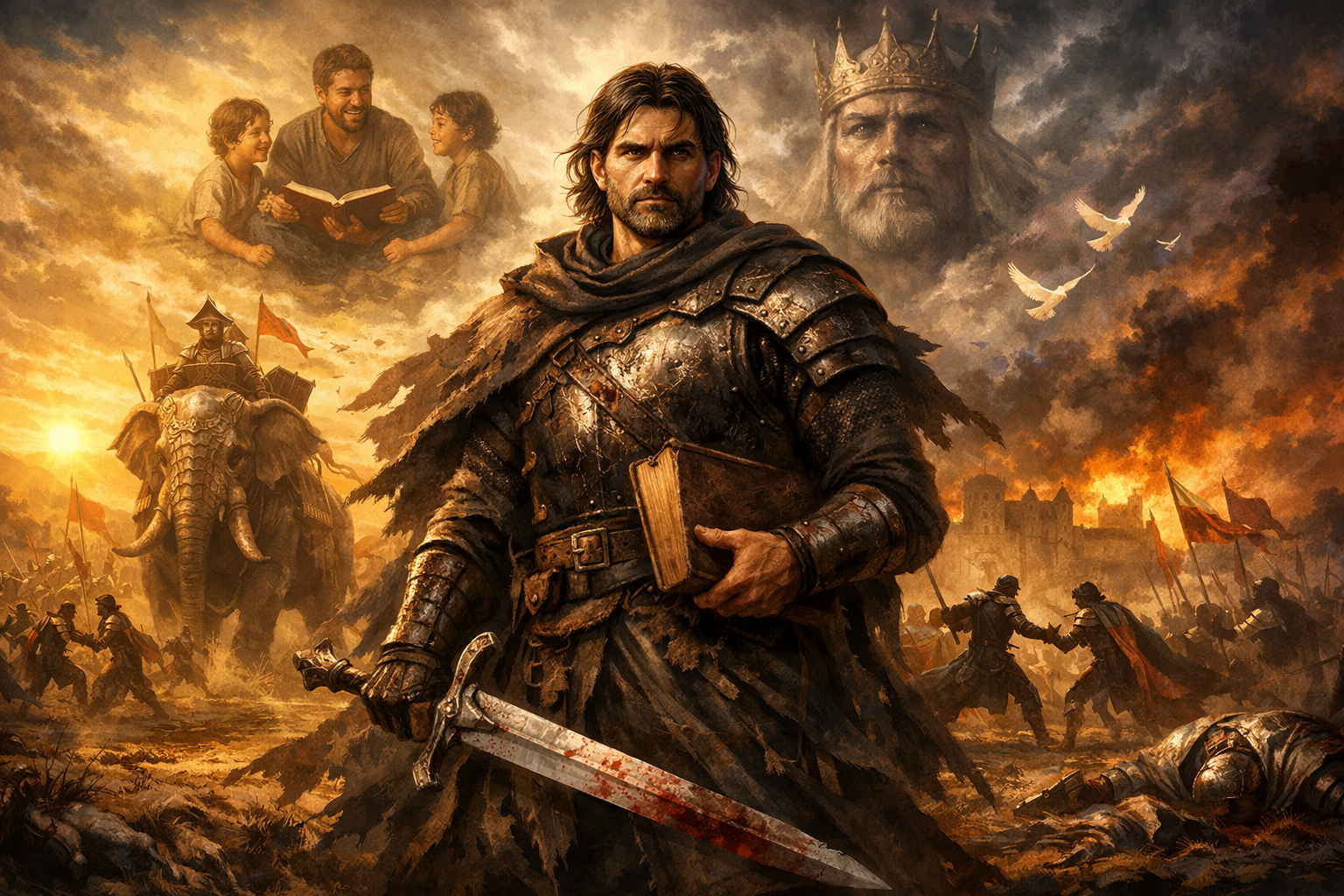
Then I heard it—a fragile breath behind me. I turned to see Zorav clinging to his final moments. I knelt beside him and, against the cruelty of fate, began telling jokes. I laughed—not from joy, but to shield him from sorrow. Yet after my third jest, silence answered me. His chest no longer rose.
Tears betrayed my resolve.
In that blood-soaked stillness, I swore an oath: never again would I take a life for greed or selfish gain. I carried his body home, though the heaviest burden was not his weight, but my regret.
When I informed the king of our losses, he showed no grief. Instead, he demanded only one answer—had we won? His indifference ignited a fire within me fiercer than war. To him, soldiers were expendable pieces upon a board of conquest.
In a moment of fury and conviction, I drew my dagger and ended his tyranny.
Silence followed—familiar, yet different. This time, I felt no sorrow.
The kingdom expected to condemn me. Instead, they called me saviour. The people had long suffered beneath his cruelty. They urged me to claim the throne, yet I refused. Power had already shown me its corruption.
Instead, I chose a different legacy—I became a teacher.
I taught children that strength is not domination, but discipline. That kindness chosen by will is greater than kindness given for reward. I taught them to value life above ambition, freedom above fear, unity above pride. I taught them to defend themselves—not to conquer, but to protect.
Years passed in harmony—until another storm gathered.
A letter arrived from Zerathion. Its ruler, King Maldraven Vose, demanded our surrender within three sunrises—or war would descend upon us without mercy.
Fear rippled through my people. I dismissed them gently, though turmoil raged within me. Surrender meant chains; resistance meant blood. By dawn, my decision stood firm—freedom must be defended.
I assembled one thousand of my former students, now men forged by principle. I would not drag the elderly into battle. We prepared tirelessly: formations refined, signals rehearsed, cannons primed, elephants concealed within forest cover.
When the appointed day arrived, shadows of the enemy darkened the horizon. Their conch shell pierced the air. I raised my voice:
“Every joy you have known, every hope you have carried—it has meaning. If we fall, it shall not be in vain. Our ancestors live through our courage. And if we must meet death, let it be with shoulders unbowed and spirits unbroken!”
Steel collided with steel. Though outnumbered, conviction steadied us. At the decisive moment, I signalled the hidden mahouts. The forest erupted as elephants charged, scattering enemy ranks like leaves before a tempest.
Their commander rode toward me for a final duel. Our blades clashed beneath a sky heavy with fate. In the end, he fell. I sentenced him to death—not from hatred, but necessity.
When the dust settled, victory was ours. We had preserved not merely land, but liberty.
The kingdom flourished thereafter—not because of war, but because of wisdom hard-earned. I remained what I had chosen to be: not a ruler of crowns, but a guardian of minds.
For I had learned that true power does not lie in conquest.
It lies in the courage to choose kindness—and the strength to defend it.